
Pharmaceutical
Product classification
Contact us
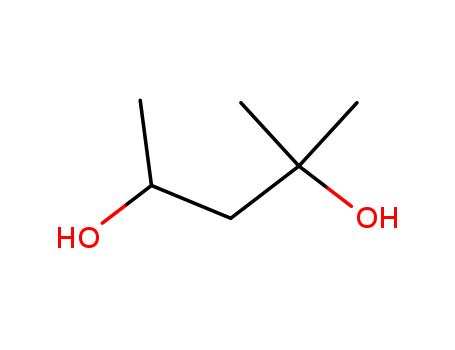
Cost-effective and customizable Hexylene Glycol 107-41-5 factory
- Molecular Formula: C6H14O2
- Molecular Weight: 118.176
- Appearance/Colour: Oily colorless liquid with a mild sweet odor
- Vapor Pressure: 0.02 mm Hg ( 20 °C)
- Melting Point: -40 °C(lit.)
- Refractive Index: n20/D 1.427(lit.)
- Boiling Point: 197.5 °C at 760 mmHg
- PKA: 15.10±0.29(Predicted)
- Flash Point: 93.9 °C
- PSA: 40.46000
- Density: 0.922 g/cm3
- LogP: 0.52820
Hexylene Glycol(Cas 107-41-5) Usage
|
Preparation |
Using 2000 L of diacetone alcohol as a raw material to synthesize isohexanediol by hydrogenation reduction, the specific process steps are:Step 1: Start the vacuum pump to vacuum the raw material metering tank. When the vacuum is greater than -0.06Mpa, close the exhaust valve, open the feed valve, mix 2000 L of diacetone alcohol raw material and 200ppm sodium bicarbonate and pump it in Raw material metering tank.Step 2: Open the vacuum valve on the reduction pot and pump the reduction pot to a vacuum of -0.1Mpa, then open the feed valve on the reduction pot, and add 2000 L of diacetone alcohol raw material and 200ppm sodium bicarbonate from the metering tank To the reduction pot, start the mixer to stir at the same time, add 95Kg of Raney nickel catalyst.Step 3: Close the vacuum valve, open the nitrogen inlet valve, and inject nitrogen into the reduction pot. After the pressure in the pot is increased to 0.6Mpa within 3 to 5 minutes, close the hydrogen inlet valve, open the vent valve, and reduce the pressure in the pot. Reduce to normal pressure, repeat the above steps, re-inject nitrogen for replacement, and repeat this five times.Step 4: When the nitrogen replacement in the third step is completed, close the vent valve, open the hydrogen inlet valve, and inject hydrogen into the reduction pot within 10-15 minutes. When the pressure in the pot reaches 0.6Mpa, close the hydrogen inlet valve. Open the vent valve, after the pressure in the pot drops to normal pressure, close the vent valve, repeat the above steps, re-inject hydrogen for replacement, and repeat this five times.Step 5: After the hydrogen replacement, close the vent valve, open the hydrogen gas inlet valve, and inject hydrogen into the reduction pot. Use hydrogen to make the pressure in the pot reach 1.9Mpa within 15 to 30 minutes, then close the hydrogen gas inlet valve and open it. Jacketed steam valve, raise the temperature in the pot to 150°C, and adjust the stirring speed to 310r/min. At this time, open the hydrogen gas inlet valve and control the temperature in the pot at 150°C. On the basis of the stable temperature in the pot, Keep the hydrogen vapor pressure at 1.9Mpa for 4 hours, then close the hydrogen gas inlet valve and accurately record the current pressure in the boiler. After 30 minutes, take a sample for gas chromatographic testing. If the raw material content is less than 1% in the test result, it is qualified. At this time, Close the jacketed steam valve and open the jacketed cooling water to reduce the temperature in the pot to normal temperature. Then, open the vent valve to reduce the pressure in the pot to normal pressure.Step 6: Stop the mixer and let it stand for 50 minutes, close the vent valve, open the nitrogen inlet valve, use nitrogen to increase the pressure in the pot to 0.6Mpa, close the nitrogen valve, open the empty valve, and slowly reduce the pressure in the pot to normal pressure , And then repeat this step 5 times.Step 7: Open the nitrogen valve and the feed valve of the distillation pot at the same time. Use 0.8Mpa nitrogen to send the qualified materials to the filter for filtration. The filtered materials are pumped into the crude isohexanediol storage tank, and then pressed to the distillation Distillation is carried out in the kettle, and the filtered catalyst is recycled; the finished product from the rectification is isohexanediol. After the raw material of 2000 L diacetone alcohol is hydrogenated and reduced to synthesize, 1865Kg of isohexanediol product is obtained with a purity of 99.5%. The mass yield is 99%. After cooling, it is placed in the isohexanediol product storage tank. The remaining by-products are mainly 29kg of 98% acetone, which can be sold as industrial acetone. |
|
Production Methods |
2-Methyl-2,4-pentanediol is prepared commercially by the catalytic hydrogenation of diacetone alcohol . It is used as a chemical intermediate, a selective solvent in petroleum refining, a component of hydraulic fluids, a solvent for inks, and as an additive for cement . Industrial exposure is likely to be from direct contact or from inhalation, particularly if the material is heated. |
|
Definition |
ChEBI: A glycol in which the two hydroxy groups are at positions 2 and 4 of 2-methylpentane (isopentane). |
|
General Description |
Oily colorless liquid with a mild sweet odor. Floats and mixes slowly with water. |
|
Air & Water Reactions |
Hygroscopic. Water soluble [Hawley] |
|
Reactivity Profile |
2-Methyl-2,4-pentanediol is incompatible with the following: Strong oxidizers, strong acids [Note: Hygroscopic (i.e., absorbs moisture from the air).] . |
|
Hazard |
Toxic by ingestion and inhalation; irritant to skin, eyes, and mucous membranes. Combustible. |
|
Health Hazard |
Irritation of eyes, nose and throat; headache, dizziness, and nausea. |
|
Chemical Reactivity |
Reactivity with Water No reaction; Reactivity with Common Materials: Can catch fire when in contact with porous materials such as wood, asbestos, cloth, soil, or rusty metals; Stability During Transport: Stable at ordinary temperatures, however when heated this material can decompose to nitrogen and ammonia gases. The decomposition is not generally hazardous unless it occurs in confined spaces; Neutralizing Agents for Acids and Caustics: Flush with water and neutralize the resulting solution with calcium hypochlorite; Polymerization: Not pertinent; Inhibitor of Polymerization: Not pertinent. |
|
Purification Methods |
Dry the diol with Na2SO4, then CaH2 and fractionally distil it under reduced pressure through a packed column, taking precautions to avoid absorption of water. [Beilstein 1 IV 2565.] |
InChI:InChI=1/C6H14O2/c1-5(7)4-6(2,3)8/h5,7-8H,4H2,1-3H3
107-41-5 Relevant articles
Catalytic Deprotection of Protected Alcohols in Water Using Low-Loading and Alkylated Polystyrene-Supported Sulfonic Acid
Iimura, Shinya,Manabe, Kei,Kobayashi, Shu
, p. 8723 - 8725 (2003)
Catalytic deprotection of various protec...
Biomimetic ketone reduction by disulfide radical anion
Barata-Vallejo, Sebastian,Bobrowski, Krzysztof,Chatgilialoglu, Chryssostomos,Ferreri, Carla,Marciniak, Bronislaw,Skotnicki, Konrad
, (2021/09/13)
The conversion of ribonucleosides to 2′-...
Protodeboronation of (Hetero)Arylboronic Esters: Direct versus Prehydrolytic Pathways and Self-/Auto-Catalysis
Hayes, Hannah L. D.,Wei, Ran,Assante, Michele,Geogheghan, Katherine J.,Jin, Na,Tomasi, Simone,Noonan, Gary,Leach, Andrew G.,Lloyd-Jones, Guy C.
supporting information, p. 14814 - 14826 (2021/09/13)
The kinetics and mechanism of the base-c...
Radical dehydroxylative alkylation of tertiary alcohols by Ti catalysis
Xie, Hao,Guo, Jiandong,Wang, Yu-Quan,Wang, Ke,Guo, Peng,Su, Pei-Feng,Wang, Xiaotai,Shu, Xing-Zhong
supporting information, p. 16787 - 16794 (2020/11/09)
Deoxygenative radical C?C bond-forming r...
Rapid Deoxyfluorination of Alcohols with N-Tosyl-4-chlorobenzenesulfonimidoyl Fluoride (SulfoxFluor) at Room Temperature
Guo, Junkai,Kuang, Cuiwen,Rong, Jian,Li, Lingchun,Ni, Chuanfa,Hu, Jinbo
supporting information, p. 7259 - 7264 (2019/05/10)
The deoxyfluorination of alcohols is a f...
107-41-5 Process route
-
-
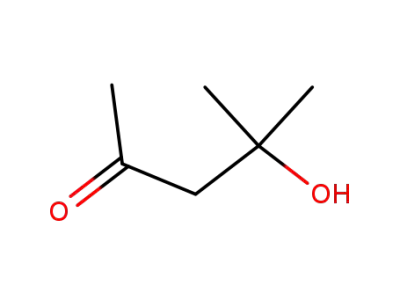
123-42-2
4-Hydroxy-4-methyl-2-pentanone

-
-
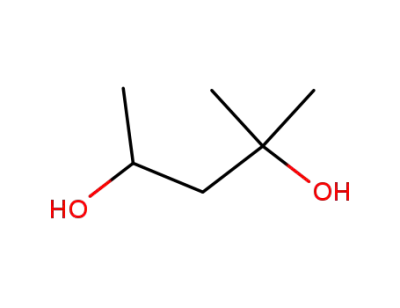
107-41-5
2-methyl-2,4-pentanediol

-
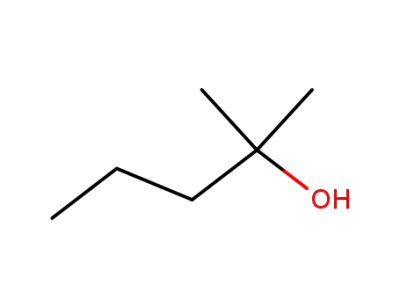
-
590-36-3
2-methylpentan-2-ol
| Conditions | Yield |
|---|---|
|
bei der elektrolytischen Reduktion;
|
-
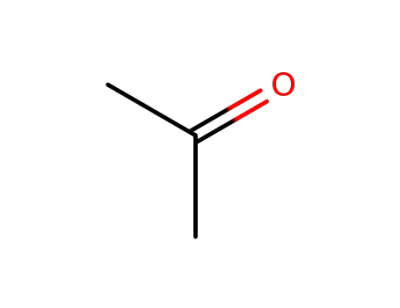
-
67-64-1
acetone
-
-
107-41-5
2-methyl-2,4-pentanediol
-
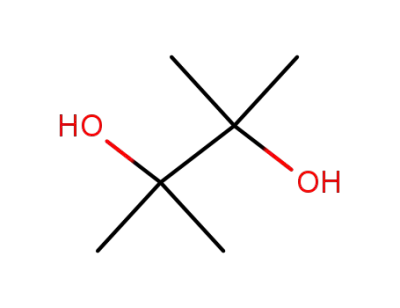
-
76-09-5
2,3-dimethyl-2,3-butane diol
| Conditions | Yield |
|---|---|
|
With
amalgamated magnesium;
|
107-41-5 Upstream products
-
123-42-2
4-Hydroxy-4-methyl-2-pentanone
-
67-64-1
acetone
-
34761-53-0
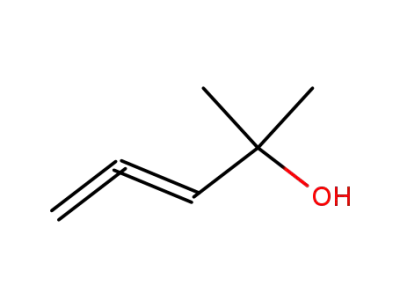
2-methyl-3,4-pentadien-2-ol
-
18826-95-4
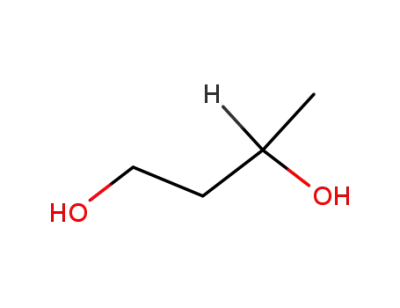
1.3-butanediol
107-41-5 Downstream products
-
6413-49-6
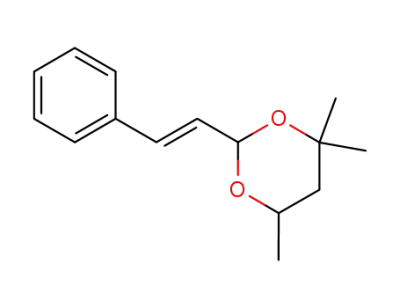
4,4,6-trimethyl-2-trans -styryl-[1,3]dioxane
-
5445-65-8
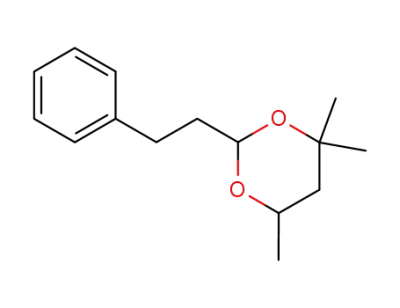
4,4,6-trimethyl-2-phenethyl-[1,3]dioxane
-
1083-44-9
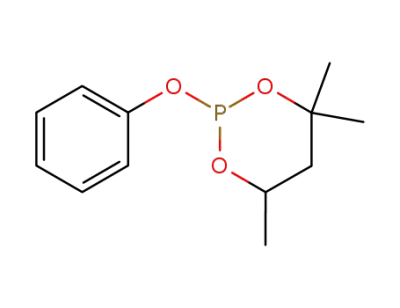
4,4,6-trimethyl-2-phenoxy-[1,3,2]dioxaphosphorinane
-
1123-07-5
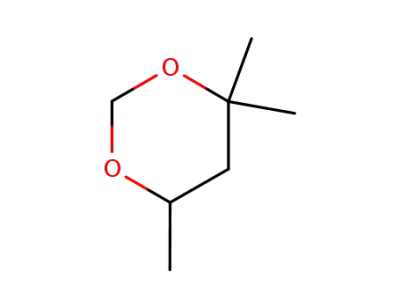
4,4,6-trimethyl-[1,3]dioxane
Related products
- Detail
-
1,2,3-Triacetyl-5-deoxy-D-riboseDetail
CAS:62211-93-2
-
DoxofyllineDetail
CAS:69975-86-6
- Detail